A specification sheet divides a car into attractive numbers: power, range, charging speed, display size and sensor count. Driving puts those numbers back together. The car must interpret a request, manage its available energy and produce a predictable response while the road and weather keep changing. That integration is where much of the engineering effort becomes visible, even when the driver never sees a component or learns the name of an algorithm.
- Assess complete vehicle behavior rather than isolated peak figures.
- Treat clear controls and predictable responses as engineering qualities.
- Separate supported functions from promises about future software.
A request travels through several systems
Pressing the accelerator looks like one action. In an electrified vehicle, the response can involve the battery, power electronics, motor controls, traction management and thermal limits. The result must suit available grip and the driver's intention. A large peak power figure tells you something about potential performance, but much less about how naturally the first few millimetres of pedal movement translate into motion in a crowded parking area.
The same distinction applies to slowing down. A vehicle may coordinate energy recovery with its friction brakes, while stability functions remain ready to intervene. The driver should experience an understandable relationship between pedal input and deceleration. Our analytical view is that consistency across ordinary conditions deserves at least as much attention as a spectacular maximum figure. A car is easier to trust when its routine responses do not require continual interpretation.
Efficiency is a chain of small decisions
Energy use is shaped by more than the efficiency of a single motor or engine. Heat must be managed, electrical power converted and unnecessary resistance avoided. Software can coordinate some of these tasks, but its decisions are constrained by the physical hardware. Bosch's software portfolio illustrates how thermal control and vehicle motion functions have become part of the same broader engineering conversation as displays and connected services.
For a buyer, the implication is to evaluate complete journeys. How much energy does the vehicle use on your route, with the cabin at a comfortable temperature? How does charging behave after a demanding drive? How much preparation is required to obtain the advertised experience? These questions connect laboratory capability to ownership. They also prevent a single impressive component from standing in for the performance of the complete vehicle.
The interface is part of the engineering
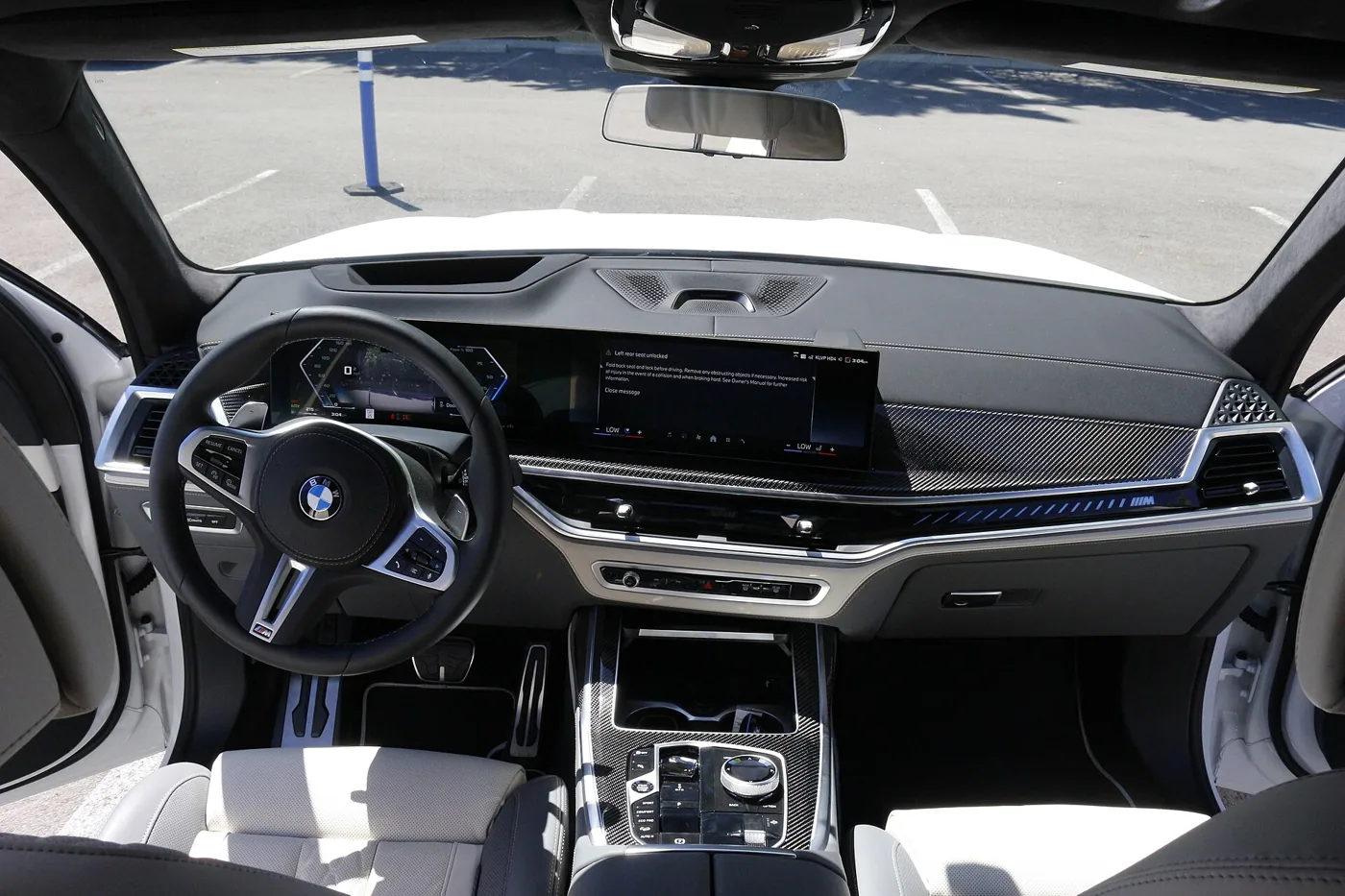
A control system does not end at its computer. It ends at the person who must understand and operate it. A useful function can lose value if its state is unclear, its settings are buried or its alerts compete with one another. Display area alone says little about whether a driver can change temperature, identify a warning or understand why an assistance feature has become unavailable.
This is why seemingly small details deserve serious attention. A visible charging target, a clear explanation of reduced power or an obvious route to demisting can make advanced hardware easier to live with. The best interface reduces the amount of technical knowledge required for routine use. It gives detail when that detail helps the driver make a decision, while keeping frequent tasks straightforward and predictable.
Updates create a continuing relationship
Software can be changed after production, which creates opportunities to fix faults and improve behavior. It also creates a continuing obligation to test, distribute and support those changes. Bosch's cybersecurity material describes the need to address vulnerabilities over time. An update mechanism is therefore a delivery channel, not proof that every future improvement will arrive or that every mechanical limitation can be removed remotely.
When evaluating a vehicle, ask what is supported today, what remains a future promise and how the manufacturer communicates changes. Read the release notes for an actual update if they are available. Look for clear installation instructions and a defined route to assistance when something does not work. The ownership experience includes the quality of that support, especially when a vehicle is kept beyond the period in which its interfaces feel new.
Reward coherent behavior
A convincing technology assessment combines three kinds of evidence. Published engineering information explains what a system is designed to do. Independent testing examines selected outcomes under controlled conditions. Personal evaluation establishes whether the behavior and controls suit the owner. None replaces the others. A manufacturer can accurately describe a clever mechanism without proving that its execution is the best choice for every driver or road.
The practical buying test is to ask whether the systems cooperate without creating unnecessary work. Does the car respond smoothly, communicate clearly and remain useful when conditions are less than ideal? Can the owner maintain it and understand its limitations? A vehicle that answers those questions well may be more technically accomplished than another with a longer list of features. Integration is difficult to advertise in one number, but it is experienced on every journey.
This perspective also changes how new features should be judged. Novelty is a reason to investigate, not a reason to assume superiority. Ask which repeated task becomes easier, which limitation is introduced and what evidence supports the claimed improvement. Technology earns its place when the complete experience becomes more capable, understandable or efficient for the people using it.
Sources & further reading
These references provide background for this analysis. Product details, regional rules and market conditions can change; check the original source for its scope and date.
Something needs a closer look? Send a correction.