The phrase global car market suggests one large competition moving in a common direction. In reality, car buyers encounter local prices, local roads, local financing and local charging arrangements. Manufacturers must respond to those differences while sharing technology and production across borders. The IEA's Global EV Outlook 2025, reporting on 2024, offers a useful historical snapshot of that uneven transition. It should be read as evidence from a defined period, not as a live description of every market today.
- Attach a geography, period and vehicle definition to market claims.
- Use sales, production and fleet figures for different questions.
- Evaluate affordability and charging access at household and regional level.
A common trend with different starting points
The IEA reported that electric car sales exceeded 17 million globally in 2024, taking their share of new car sales above one fifth. Its electric-car definition includes battery-electric and plug-in hybrid models. China accounted for the largest market, with electric cars approaching half of sales, while adoption elsewhere followed different paths. Those facts establish scale without implying that every country was approaching the same ownership conditions.
Percentage growth also depends on the starting point. A small market can grow rapidly while adding relatively few vehicles; a mature market can add many vehicles with a modest growth rate. Both measures are useful, but they answer different questions. For an automaker deciding where to build service capacity, absolute vehicles matter. For a business looking for a changing customer base, adoption rate may reveal an opportunity earlier. Treating one measure as a complete verdict discards the other half of the picture.
Affordability is a local relationship
A vehicle's price is meaningful relative to household income, available financing and competing transport options. The same imported model can occupy different positions in two countries. Exchange rates, taxes, distribution costs and specification choices affect the final comparison. A global manufacturing cost advantage therefore does not transfer automatically into an equally large showroom advantage everywhere.
Running costs are local too. Electricity and fuel prices, home charging access, insurance and repair arrangements shape the ownership calculation. A household with inexpensive overnight charging faces a different proposition from an apartment resident buying most electricity at public stations. This helps explain why a product can be attractive in one city and difficult to justify in another without either group of buyers being irrational or uninformed.
Infrastructure is uneven within countries
National charger totals can conceal strong regional differences. Major corridors may be well served while smaller towns have limited redundancy. Dense apartment neighborhoods can have many nearby cars but few convenient overnight connections. A national adoption target does not resolve those practical differences by itself. Deployment has to follow actual parking and travel patterns.
For manufacturers, that means selling the car is only one part of the proposition. Charging guidance, compatible payment services and credible aftersales support can influence willingness to adopt. A customer who understands how the vehicle fits a normal week may value a modest specification more than an impressive model surrounded by uncertainty. Infrastructure quality can therefore alter product competitiveness without changing the car's hardware.
Production leadership and market leadership differ
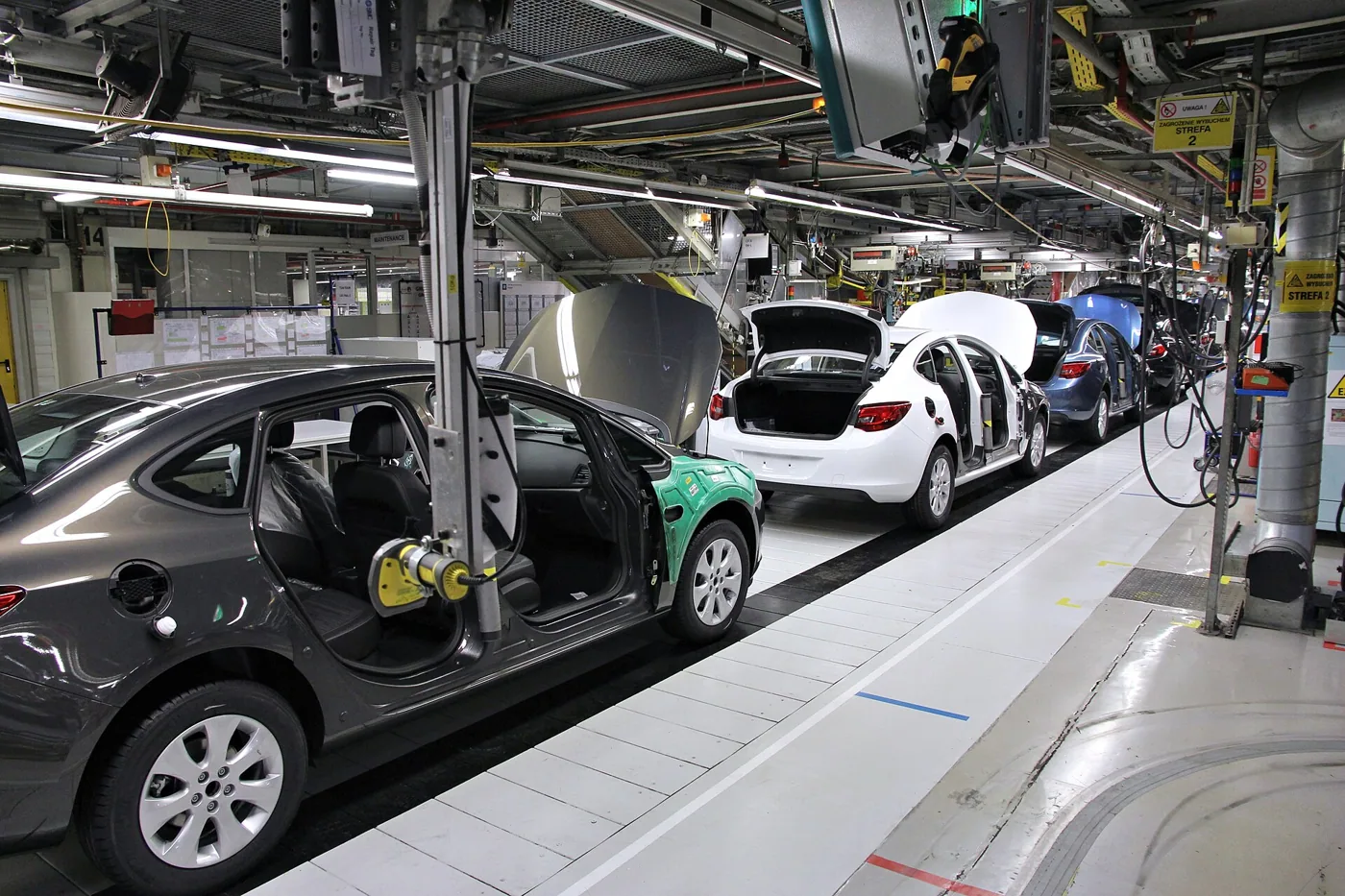
A country can produce vehicles for export while domestic buyers choose a different mix. An automaker can sell strongly in one region while relying on suppliers or factories elsewhere. Production statistics and registration statistics should not be substituted for one another. OICA's production tables describe manufacturing activity, while market sales data describes where vehicles enter use. Trade connects the two, but does not erase their distinction.
This matters when interpreting factory announcements. A new plant may serve local demand, export demand or an effort to reduce logistics and policy exposure. Its success depends on utilization, supplier readiness and competitive products, not simply on its announced annual capacity. Industrial strategy can create useful resilience, but duplicated investment also carries costs. The relevant assessment asks what demand and capabilities support the location over time. Service infrastructure deserves a place in that assessment as well. A market can receive imported cars quickly while technicians, parts warehouses and diagnostic systems take longer to establish. For the first customers, those less visible investments determine how easily a vehicle returns to use after a fault. Export growth becomes a stronger competitive position when the ownership support develops alongside the sales channel.
Read the transition as a set of practical decisions
For readers, the most useful habit is to attach a place, a period and a definition to every market claim. Ask whether the figure covers battery-electric cars alone or includes plug-in hybrids. Check whether it measures sales, registrations, production or vehicles already on the road. Then consider which customer problem the figure helps explain. This makes it harder for a dramatic headline to outrun the evidence beneath it.
The larger direction of electrification does not imply a smooth or synchronized path. Product cycles, charging investment, household budgets and policy changes can produce pauses and accelerations. A robust manufacturer needs products and operating plans that can work across several plausible regional outcomes. A buyer needs a car suited to the local reality they face now. Those are different decisions, and a good analysis keeps both in view instead of asking one global number to settle them.
Sources & further reading
These references provide background for this analysis. Product details, regional rules and market conditions can change; check the original source for its scope and date.
Something needs a closer look? Send a correction.